

BIP-110 reflects growing frustration among node operators who believe the network is drifting from its original purpose.

The fight over Bitcoin’s future is heating up, and this time the opposition is coming from an unexpected place.
Blockstream CEO Adam Back, who is usually known for supporting Bitcoin’s traditional sound money values, has strongly criticized a new proposal called BIP-110.
This proposal aims to limit spam on the network, including JPEG images and audio files stored as Ordinals.
A developer named Dathon Ohm supports BIP-110 and says it is urgently needed to prevent people from misusing the blockchain to store large amounts of data.
Adam Backs opposes BIP-110
Содержание статьи:
However, Adam Back disagrees. On 16th February, he called the proposal a “lynch mob attempt,” saying it tries to force major changes without proper agreement from the community. He warned,
“It’s worse as it is an attack on bitcoin’s credibility as a store of value, it’s security credibility, and a lynch mob attempt to push changes there is not consensus for.”
Even with his criticism, the proposal is gaining support. Around 7.5% of Bitcoin [BTC] nodes, mostly using the Bitcoin [BTC] Knots software, have already agreed to follow these stricter rules.
The debate intensified after Back was questioned whether he truly believes the proposal, meant to reduce spam, is more harmful than Ordinals, which use SegWit and Taproot to add extra data to the network.
To which Back replied,
“spam is just an annoyance, it all definitionally fits within the block-size. the op returns are 4x smaller.”
He added,
“pushing for a fork, when you know there is not consensus, is contentious. and people have explained repeatedly what is defective and bad about the BIP, freezing UTXOs, disabling features, 55% activation, flag day and filter proponents seem unable to understand or listen or care.”
Why was BIP-110 proposed in the first place?
That said, BIP-110 is not just about technology. It also shows that power inside the Bitcoin network is shifting. For many years, Bitcoin Core controlled almost 98% of all nodes.
Now, its share has dropped to about 77.2%. At the same time, Bitcoin Knots has grown to around 22.7%, as more users switch software.
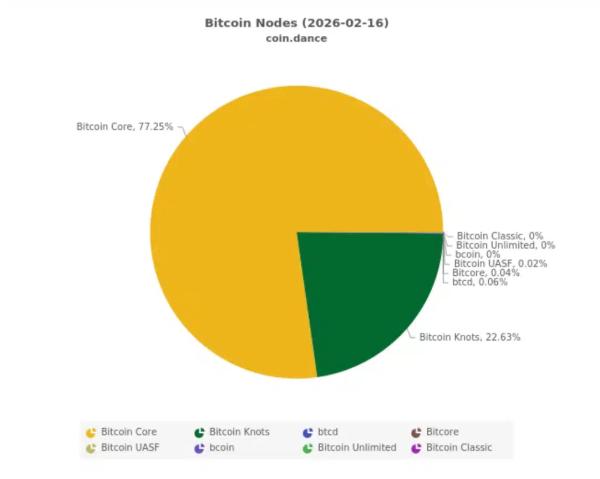
Source: Coin Dance
This shift started in late 2025, when Bitcoin Core removed the 80-byte limit on the OP_RETURN function. This change made it easier to add images and other large data to Bitcoin.
As more spam entered the network, many users became unhappy. This is why BIP-110 was proposed, to cut down on this extra data.
The risk of a Hard Fork
While BIP-110 is under debate, another controversy emerged last year.
Leaked messages suggested that Luke Dashjr was considering a hard fork that would allow a small “trusted committee” to remove illegal data from the blockchain.
Supporters say this could reduce legal risks, but critics warn it would enable censorship and weaken Bitcoin’s core values.
Together, these debates show that Bitcoin is now questioning who controls the network, and whether it can remain truly neutral and decentralized.
Final Summary
- Concerns about frozen UTXOs raise serious risks, as even small technical changes could affect real user funds. Developers now face pressure from users, miners, and regulators at the same time, making compromise harder than ever.
Next: STABLE price prediction: THIS bullish pattern targets a move to $0.045!
Source
